


Getting better at skiing isn't about skiing faster or tackling steeper runs before you're ready. It's about control. The skiers who progress fastest are the ones who understand exactly what their current level looks like, what's holding them back, and what specific changes will move them forward.
This guide breaks skiing down into three stages: beginner, intermediate, and advanced. For each one, we'll cover what actually defines that level, the mistakes that tend to keep people stuck, and drills that help you move to the next stage. Whether you're still finding your feet in a snowplough or you're refining technique on steeper terrain, there's something here to work on.
Beginner, Intermediate, or Advanced? A Quick Reference
Skill level isn't just about which runs you're comfortable on. It's a combination of terrain, turn shape, and the technique markers underneath both. Here's a quick snapshot before we go deeper.
| Skill Level | Typical Terrain | Turn Shape | Key Technique Markers |
|---|---|---|---|
| Beginner | Green runs, gentle gradients | Wide snowplough (wedge) turns | Learning to control speed, basic balance, turning both directions |
| Intermediate | Blue runs, some steeper greens | Narrowing wedge to parallel turns | Weight transfer between skis, linking turns, edge control |
| Advanced | Black runs, moguls, variable terrain | Fully parallel, carved turns | Independent leg action, pole plant timing, adapting to terrain changes |
Use this as a rough guide rather than a strict rulebook. Plenty of skiers are technically intermediate but still avoid black runs, or ski greens with genuinely advanced technique. The table is a starting point, not a verdict.
Beginner Skiing: Building the Foundations
What Makes You a Beginner Skier
If you're still relying on a snowplough (wedge) to control your speed and turn, you're a beginner. That's completely normal, and it's the right tool for this stage. Beginners are focused on the basics: staying balanced, controlling speed on gentle terrain, and learning to turn confidently in both directions.
The Most Common Beginner Mistakes
The biggest mistake at this stage is leaning back. It feels safer, but it actually makes skis harder to control and puts more pressure on your quads than necessary. A close second is death-gripping the poles or holding them out in front like a shield, which throws off balance rather than helping it.
Many beginners also try to turn using their upper body, twisting their shoulders and hips to force the skis around. Turns should come from the legs and feet, with the upper body staying relatively calm and facing down the slope.
Drills to Move Toward Parallel Turns
A few simple drills make a real difference at this stage:
- Garlands: traverse across a gentle slope, making small turns back toward the fall line without fully committing to a new direction. This builds edge feel without the pressure of a full turn.
- One-ski balance: while stationary or moving slowly, lift the inside ski slightly during a turn to feel weight shift onto the outside ski. This is the foundation of parallel skiing.
- Narrowing the wedge: consciously bring your skis closer together as you turn, rather than keeping a wide, static snowplough throughout.
Once turning both directions feels comfortable and speed control isn't a constant worry, you're ready to start narrowing that wedge into parallel turns.
Intermediate Skiing: Refining Control
What Makes You an Intermediate Skier
Intermediate skiers are moving away from the snowplough and linking parallel turns, even if they're not fully consistent yet. You're comfortable on most blue runs and can handle some variation in terrain and pitch without defaulting back to a wedge out of nerves.
Where Intermediate Skiers Get Stuck
This is where a lot of skiers plateau, often for years. The usual culprit is inconsistent weight transfer. Instead of committing fully to the outside ski through a turn, many intermediate skiers hedge their bets, keeping weight too evenly spread across both skis. This makes turns feel vague and harder to control on anything steeper than a gentle blue.
Another common sticking point is turning the whole body instead of using the legs independently. If your shoulders are twisting every time you turn, your skis are following your upper body rather than working underneath a stable frame.
Speed can also become a mental barrier here. Some intermediate skiers ski too cautiously, using a hockey stop or excessive turn shape to control speed rather than trusting their edges. Others go too fast for their technique, which reinforces bad habits under pressure.
Drills to Push Toward Advanced Terrain
- Railroad track turns: focus on carving clean, rounded turns with minimal skidding, feeling the edges grip rather than slide.
- Pole plant timing: practise planting your pole slightly ahead of each turn as a rhythm cue. This helps time weight transfer and keeps the upper body facing downhill.
- Steeper terrain in short bursts: pick a slightly steeper blue or an easy black and ski short, controlled sections rather than the whole run at once. This builds confidence without overwhelming your technique.
The shift from intermediate to advanced usually isn't one big leap. It's the gradual tightening of these habits until they become automatic.
Advanced Skiing: Reading Terrain and Refining Technique
What Makes You an Advanced Skier
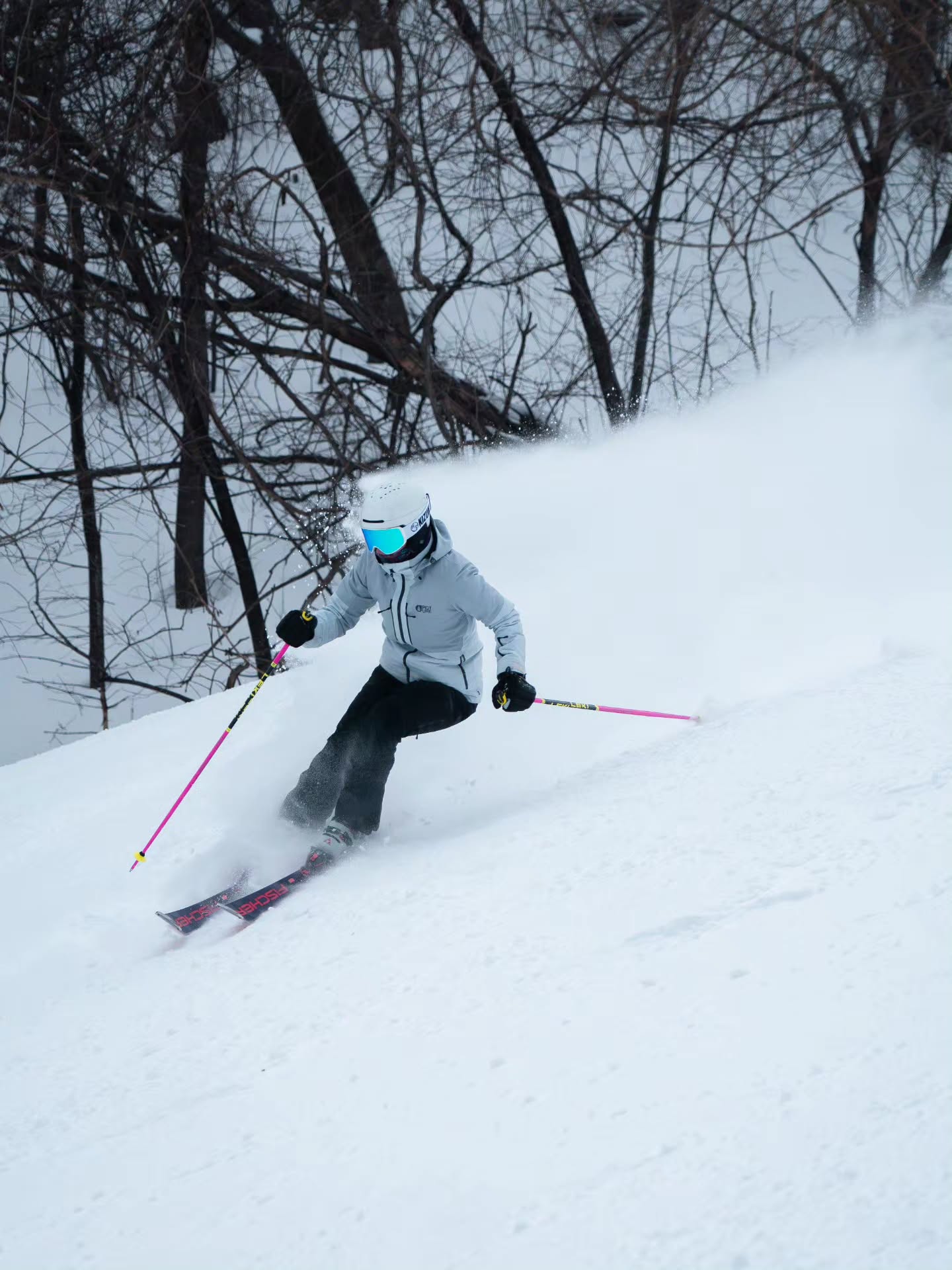
Advanced skiers ski parallel as a default, with turns that are shaped by choice rather than necessity. You can adapt technique to different terrain and snow conditions, whether that's moguls, variable snow, or steeper black runs, without your form falling apart.
The clearest marker of advanced skiing isn't confidence on hard runs. It's independent leg action: the ability to move each leg separately while keeping the upper body stable and quiet. This is what allows advanced skiers to absorb bumps, adjust mid-turn, and stay in control when terrain changes unexpectedly.
Technique That Matters More Than Speed
At this stage, the biggest technical refinements are often subtle. Pole plant timing becomes more precise, used to set rhythm on steep or mogul terrain rather than just as a balance aid. Vision and line choice matter more too, looking further down the run to plan turns in advance rather than reacting turn by turn.
Conditions also start to matter more at this level. Steeper terrain, moguls, and variable light all demand quicker decisions and clearer sightlines. This is where visibility genuinely affects technique, not just comfort. On flat light days or terrain with shifting snow textures, being able to actually see definition in the snow makes it far easier to commit to a line rather than skiing tentatively. It's part of why lens choice matters as much as fit for skiers pushing into more demanding terrain, something we cover in our ski goggles lens guide.
Technique Habits That Help at Every Level
A few habits matter regardless of where you're at:
Stance stays neutral. Whether you're a beginner or advanced skier, leaning too far back or too far forward undermines control. A balanced, centred stance over your skis is the base everything else builds on.
Vision leads the turn. Looking where you want to go, rather than down at your skis, naturally improves balance and turn timing at every level.
Fatigue erodes technique fast. Most falls and form breakdowns happen when skiers are tired but keep pushing. Technique holds up far better on fresh legs, so it's worth taking breaks before fatigue sets in, not after.
Terrain choice is part of technique. Skiing terrain that's slightly below your comfort zone, deliberately, is one of the fastest ways to clean up technique. It's hard to focus on form when you're just trying to survive a run.
If you're planning where to put these habits into practice, our guide to Australia's major ski resorts breaks down terrain variety across the country's mountains, useful for finding runs that match exactly where you're at.
Progress Comes from Control, Not Confidence
It's tempting to measure progress by which runs you're brave enough to attempt. But real progress in skiing comes from control: turns that are shaped by choice, weight that shifts deliberately, and technique that holds up as terrain and conditions change.
Gear plays a smaller role in this than most people expect, but it's not nothing. Being able to see clearly, whether that's flat light on an overcast day or bright glare off fresh snow, removes one more variable so you can focus purely on technique. If you're due for a lens check before your next trip, our guide to ski goggle fogging and our Dawn Magnetic Ski Goggle are both worth a look.
Whatever level you're at, the path forward is the same: identify what's actually limiting your technique, drill it deliberately, and let the terrain follow, not lead.
Share:
Perisher: The Complete Skiing and Snowboarding Guide
Hotham: The Complete Skiing and Snowboarding Guide