


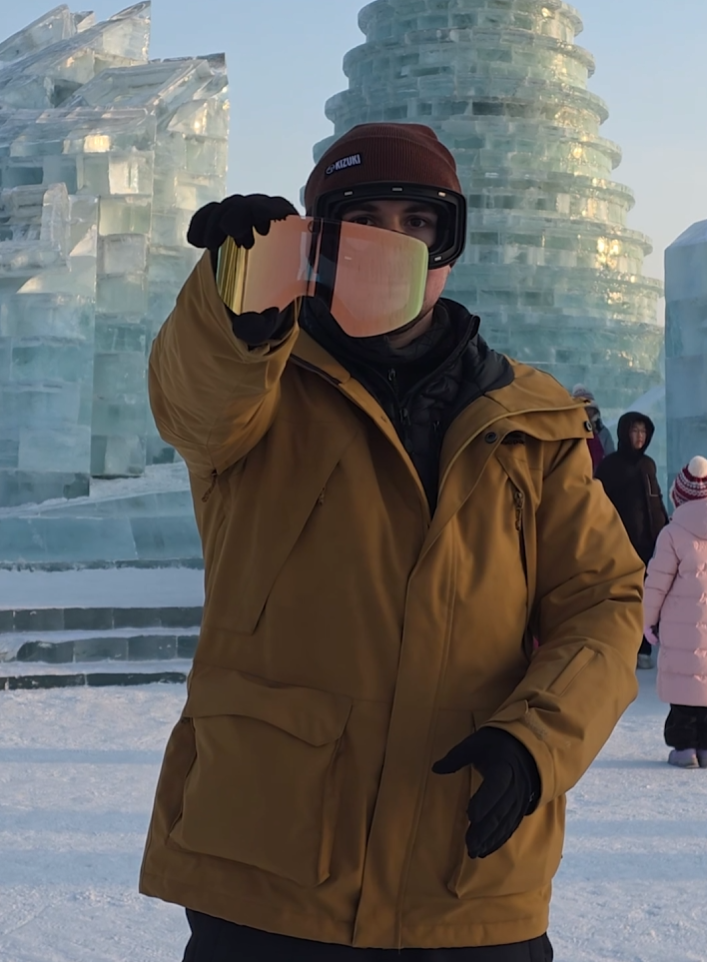
When most people choose a replacement lens for their ski goggles, they pick a colour they like. That makes sense. You want something that looks good on the mountain. But with many goggle brands, the colour you choose also determines how much light reaches your eyes, and that's a detail that often goes unnoticed until you're squinting through flat light in a lens that wasn't designed for it.
KIZUKI made a different decision when designing the Dawn lens range. Every lens, regardless of colour, delivers the same certified VLT S2 rating. Forest Green, Horizon Red, Glacial Blue, Summit Gold. They all transmit light identically. The colour you choose is purely a style preference. The visibility you get is always the same.
Here's why that matters, and how we got there.
What Is VLT in Ski Goggles?
VLT stands for Visible Light Transmission. It's a percentage that tells you how much light passes through your goggle lens.
A higher VLT lets more light through, which helps in dark or low-light conditions. A lower VLT blocks more light, which reduces glare and eye strain on bright, sunny days.
Think of it like sunglasses. A very dark lens on a flat-light day makes everything harder to see. A very light lens on a bluebird day leaves your eyes working overtime. VLT is the number behind that experience.
For ski goggles, getting VLT right is more than a comfort issue. It directly affects how clearly you can read terrain, judge snow texture, and react to what's ahead. If you want to go deeper on how lenses work, the KIZUKI lens guide covers the full picture.
The S-Rating System Explained
Goggle lenses are classified into categories based on their VLT range. These are referred to as S-ratings, running from S0 through to S4.
| Category | Conditions | VLT Range |
|---|---|---|
| S0 | Night | 80%–99% |
| S1 | Low light | 43%–79% |
| S2 | Medium light | 19%–42% |
| S3 | Bright light | 8%–18% |
| S4 | Intensive light | Less than 8% |
Most riders on Australian resorts will spend the majority of their time in S1 and S2 conditions. Australian snow days regularly mix bright patches, cloud cover, and shifting light across a single run, which is exactly why S2 has become the most practical everyday rating for local conditions.
Why Lens Colour and VLT Are Often Linked
In many goggle ranges, lens colour and VLT are connected. A dark or heavily tinted lens tends to have a lower VLT, blocking more light. A lighter, more vibrant lens colour often has a higher VLT, letting more light through.
This creates a situation most buyers don't realise they're in. When you choose a lens colour, you're also choosing a light transmission level. A rose lens and a midnight black lens from the same brand may perform completely differently on the mountain, even though nothing on the packaging makes that obvious at the point of purchase.
For riders who want to match lenses to specific conditions, this is workable. But for riders who want one versatile lens that handles the variability of a typical alpine day, it means there's no safe default. Every colour becomes a different performance choice.
The KIZUKI Decision: One VLT Rating, Every Lens
When we designed the Dawn lens range, we wanted to remove that guesswork entirely.
Every KIZUKI Dawn lens is rigorously tested and certified to deliver a VLT S2 rating of 19%–42%. That applies to every colour in the range: Midnight Black, Forest Green, Glacial Blue, Horizon Red, Twilight Rose, Alpine Pink, Summit Gold, and Blizzard Silver. Same rating, every lens, no exceptions.
The S2 range sits in the medium-light sweet spot. It handles sunshine, partial cloud, overcast patches, and the kind of shifting conditions that define a typical day on an Australian resort. It's not optimised for one extreme. It's designed to perform consistently as the day changes around you.
What this means practically is that when you choose a lens colour from the KIZUKI lens range, you're making a purely visual decision. You're not accidentally choosing a low-visibility lens because you liked the colour. You're not trading performance for style. Every colour delivers the same clear, balanced vision on the mountain.
The lens colour is yours to choose. The visibility is already taken care of.
What About Low-Light and Overcast Days?
S2 covers a wide range of conditions, but on genuinely flat-light days, heavy overcast, falling snow, or those grey mornings when the mountain loses all contrast, you want something with a higher VLT to pull more light through.
That's why every Dawn goggle comes with a bonus overcast lens included in the box.
Not as an optional add-on. Not as a separate purchase. Included.
The overcast lens is designed specifically for low-light conditions, giving you the higher VLT you need when the sky closes in and terrain definition gets harder to read. And because the Dawn uses a magnetic lens system, swapping between your primary lens and the overcast lens takes seconds. You're not fumbling with frames at the base of the lift. You pull one lens out and click the other in.
Conditions on the mountain change fast. The point of including the overcast lens with every goggle is that you're never caught without the right option. For more on riding in low-light conditions, take a look at our guide to ski goggles for low light.
How to Use Your Lenses Across the Day
Keeping it simple:
Your primary Dawn lens is the right choice for most conditions: sunny mornings, mixed cloud, and everything in between. The S2 rating handles the variability of a typical Australian snow day without needing to second-guess it.
Your included overcast lens is what you reach for when light drops noticeably. Heavy cloud, snowfall, late afternoon flat light, or tree runs where contrast disappears. If your primary lens starts making the mountain feel darker than it should, swap it out.
The magnetic system makes the switch fast enough that you can do it between runs without slowing anyone down.
Visibility Shouldn't Be a Guessing Game
The standardised S2 decision wasn't made to simplify a product range. It was made because riders shouldn't have to cross-reference a VLT chart every time they want to change their look.
Choosing a goggle lens should feel like choosing what to wear. The included overcast lens means the low-light scenario is already handled before you leave home.
For riders who want to explore the full Dawn lens range, every colour delivers the same S2 performance. The only question is which one you like the look of. Browse the full range in the Dawn Goggle Collection or the Dawn Slim Goggle Collection.
Share:
Dawn Standard vs Slim: How to Find the Right Ski Goggle Fit
Best Ski Resorts in Australia: A Guide to Every Major Mountain