


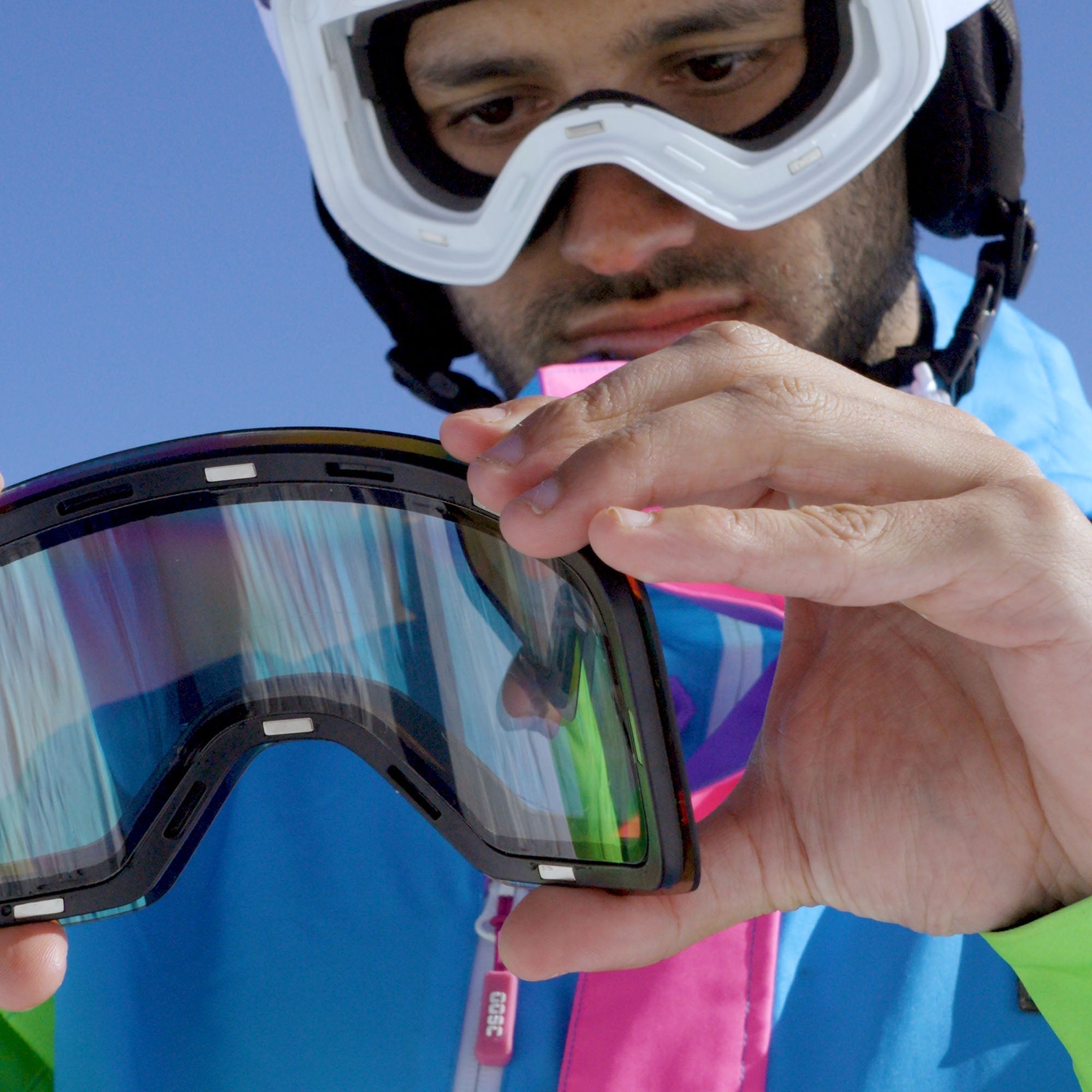
Low light conditions on the mountain can make even experienced riders feel unsure. Flat light, fog, and whiteout conditions reduce visibility, making it harder to read terrain and react quickly. The right ski goggles, snow goggles, or snowboard goggles can dramatically improve how well you see in these environments, especially when choosing low light ski goggles built for poor visibility.
Choosing the correct lens is not just about comfort. It directly impacts safety, confidence, and performance when visibility is at its worst. That is why KIZUKI keeps things simple. Every KIZUKI Dawn goggle comes with a bonus overcast lens included, so you can quickly switch when the weather turns.
What Is the Best Ski Goggle Lens for Low Light?
The best ski goggle lens for low light or overcast conditions is a high VLT lens, usually in the S0 to S2 category, because it lets more light through and improves contrast on snow.
These lenses help brighten your field of vision, make terrain easier to read, and improve clarity in fog, flat light, and whiteout conditions. Low light ski goggles are often designed around these lens characteristics, with yellow, rose, or light amber tones commonly used to improve contrast against snow.
With KIZUKI, the process is simpler. Rather than forcing customers to decode an overly technical lens system, every Dawn goggle includes a bonus overcast lens designed for poor visibility conditions. When the weather changes, you can swap lenses using the easy magnetic system and keep riding with clearer vision.
Why It Is Hard to See in Flat Light, Fog and Whiteout Conditions
Flat light makes it difficult to see terrain because clouds, fog, or blowing snow remove shadows and contrast from the surface. In simple terms, the mountain starts to look flat, even when it is not.
That matters because bumps, ruts, ice patches, and drops become harder to judge. In whiteout conditions, your eyes lose the visual cues they normally rely on to interpret depth and shape. This can reduce confidence, slow reaction time, and make riding more tiring than it should be.
The right snow goggles help by improving contrast and making it easier to pick up subtle terrain changes. Even when visibility is poor overall, the correct lens can help you separate the snow surface from the weather around you.
What Is VLT in Ski Goggles?
VLT stands for Visible Light Transmission. It tells you how much light passes through the lens and reaches your eyes. Lower VLT means a darker lens for bright conditions, while higher VLT means a lighter lens for low light conditions.
Here is a simple breakdown of ski goggle VLT categories:
- S0 (80 to 100% VLT): Night skiing or extremely low light
- S1 (43 to 80% VLT): Fog, heavy cloud, and very overcast days
- S2 (18 to 43% VLT): Mixed conditions and everyday versatility
- S3 (8 to 18% VLT): Bright sunshine
- S4 (3 to 8% VLT): Extreme alpine glare
If you are researching the best lens for foggy skiing or overcast snowboarding, VLT is one of the most useful specs to understand. It explains why one lens feels too dark in cloud and another feels too bright in full sun.
KIZUKI uses an S2 lens for everyday riding because it covers the conditions most people actually face on the mountain. Then, for more difficult visibility, the included overcast lens gives you a dedicated option without making the buying decision more complicated than it needs to be.
Which Lens Colour Is Best for Overcast and Foggy Snow?
The best lens colours for overcast, foggy, and low light snow conditions are usually yellow, rose, or light amber because they help improve contrast and make terrain features easier to see.
These lens tints are popular because they can help define contours in flat light. Many brands build entire lens systems around multiple colours for highly specific conditions, but that can be confusing for riders who just want a setup that works well without overthinking it.
KIZUKI takes a simpler approach. Instead of creating a complicated colour matrix, the Dawn system gives you an everyday S2 lens plus a bonus overcast lens for lower visibility days. That means less guesswork and a more straightforward decision when choosing your next pair of snow goggles or low light ski goggles.
Do You Need Different Lenses for Different Conditions?
Yes, different weather conditions are better served by different lenses, especially when comparing bright sun to flat light, fog, or whiteout conditions.
That said, most riders do not want to carry a confusing collection of lenses or spend time learning an overly technical system. They want something that covers daily use, plus an easy backup for low light days.
That is exactly where the KIZUKI Dawn setup makes sense:
- S2 lens for everyday riding
- Bonus overcast lens included with every goggle
- Easy magnetic lens swap system
For whiteout days or completely low light conditions, you can switch to the included overcast lens in seconds. For mixed weather, the standard S2 lens remains a strong all-round option. You can view the full range of magnetic lenses here.
Why Low Light Vision Matters on the Mountain
Low light vision matters because better visibility improves terrain awareness, confidence, and safety. When you can read the snow more clearly, you are better able to react to changes in the surface and ride more smoothly.
In poor conditions, visibility problems can lead to misjudging speed, distance, and shape. Ice patches, rollers, chopped snow, and drops can all become harder to spot. Your eyes also work harder when contrast is low, which can contribute to fatigue over a full day on the mountain.
Good snowboard goggles and ski goggles are not just about blocking wind and snow. They are also about helping you see the terrain in front of you with enough clarity to make better decisions.
How to Choose Snow Goggles for Low Light Conditions
If you are buying low light ski goggles for fog, overcast weather, or whiteout days, focus on a few practical features rather than getting lost in marketing terms.
1. Look for the Right VLT Range
A higher VLT lens is generally better for low light because it allows more light through and improves visibility when conditions are dark or flat.
2. Prioritise Easy Lens Swapping
If conditions change often, a magnetic system makes a real difference. You are far more likely to actually swap lenses when the process is quick and simple.
3. Choose a Versatile Daily Lens
For most riders, an S2 lens is a practical everyday choice because it handles mixed mountain conditions well without being too dark or too bright.
4. Make Sure Anti-Fog Performance Is Strong
Low light days often come with moisture, cloud, and temperature changes. Dual-lens construction and good ventilation help reduce internal fogging.
5. Check Fit and Helmet Compatibility
Your goggles should sit flush against your face, feel secure without pressure points, and pair properly with your helmet. You can browse KIZUKI accessories here and learn more about the brand on the About Us page.
Conclusion
The best ski goggle lens for low light is one that improves contrast, lets in enough light, and helps you read the mountain when visibility drops. That is why VLT matters, and why having the right lens for overcast and foggy conditions can make such a noticeable difference.
For riders who want a simpler approach, KIZUKI removes the guesswork. The Dawn system gives you an everyday S2 lens plus a bonus overcast lens included with every goggle, so you are better prepared for changing weather without managing a complicated lens setup. You can explore the full KIZUKI range here or visit The Alpine Hub for more guides on ski goggles, snow goggles, and low light ski goggles.
Share:
Ski Goggles OTG: Over-the-Glasses Snow Goggles for Clear Vision
Ski Goggles Lens Guide: How to Choose the Right Lens for Any Condition
1 comment
Hello, l am planning to spend time in Hokkaido and wondering if the Kizuki Dawn goggle would suit the winter? Also, is the Overcast lense a S1 rating and UV protected? Best regards!