


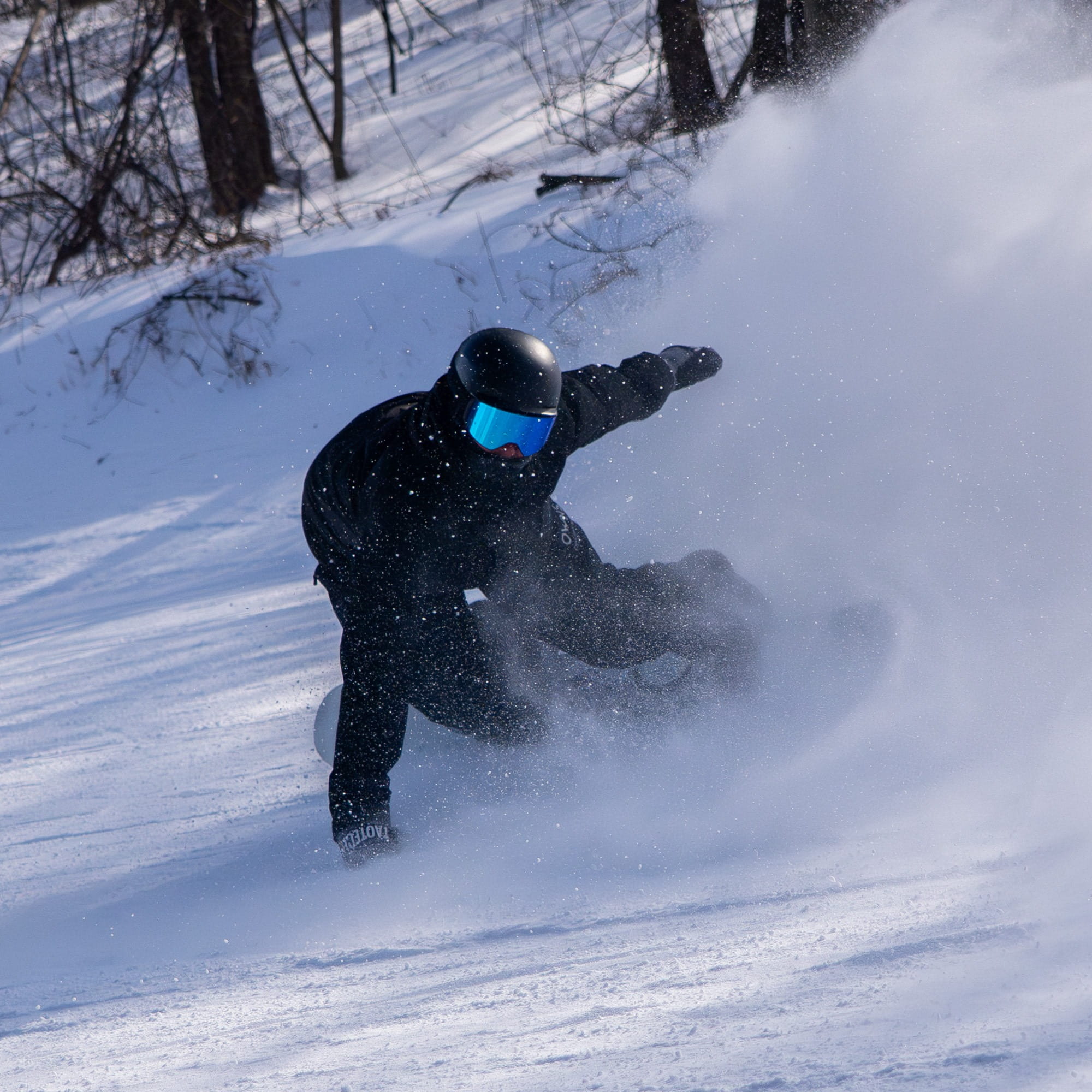
Getting better at snowboarding isn't about riding faster or dropping into steeper terrain before you're ready. It's about control. The riders who progress quickest are the ones who understand exactly what their current level looks like, what's actually holding them back, and which specific changes will move them forward.
This guide breaks snowboarding down into three stages: beginner, intermediate, and advanced. For each one, we'll cover what genuinely defines that level, the mistakes that tend to keep riders stuck, and drills that help you move to the next stage. Whether you're still finding your balance in a straight glide or you're refining carves on steeper pitches, there's something here worth working on.
Beginner, Intermediate, or Advanced? A Quick Reference
Skill level on a snowboard isn't just about which runs you're comfortable on. It's a mix of terrain, riding style, and the technique markers underneath both.
| Level | Terrain | Riding Style | Key Technique Markers |
|---|---|---|---|
| Beginner | Green runs, gentle gradients | Skidded turns, one edge at a time, frequent stopping | Learning to balance, controlling speed with the heel edge, linking a few turns |
| Intermediate | Blue runs, moderate steeps | Linked turns, both edges used confidently | Weight shifting through the turn, reading terrain ahead, riding switch a little |
| Advanced | Black runs, variable and off-piste terrain | Carved turns, independent upper and lower body movement | Edge control at speed, adapting to changing snow, confident switch riding |
These markers are a guide, not a strict rulebook. Plenty of riders are technically capable on blue runs but still skid every turn, and that's a sign there's more refinement to do before terrain gets harder.
Beginner: Building the Foundation
What defines a beginner rider
At this stage, you're learning to stand on a moving board and control your speed and direction using your edges. Most turns are skidded rather than carved, and a lot of energy goes into just staying upright.
Common mistakes that keep beginners stuck
The most common issue is riding in the "back seat," leaning back with weight on the back foot out of fear of catching the front edge. It feels safer, but it makes turning harder and increases the chance of falling.
Another frequent mistake is looking down at the board instead of ahead at the terrain. Where your eyes go, your body tends to follow, so staring at your feet often leads to losing balance or drifting off line.
Toe-side falls are also common early on, usually caused by leaning too far forward too quickly when trying to initiate a turn.
Drills that help beginners progress
Skating balance drill: With one foot out of the binding, practice gliding and balancing on the board alone. This builds a feel for the board's edges before turns are involved.
Garland turns: Traverse across a gentle slope, initiating and releasing a turn without fully committing to it. This teaches edge control in a low-pressure setting.
Falling leaf: Ride heel-side, then toe-side, sliding sideways down the slope without turning. It's one of the best ways to build confidence on each edge independently.
A beginner is ready to move up when they can link a handful of turns down a green run without stopping to reset, and when speed control feels manageable rather than frightening.
Intermediate: Linking It All Together
What defines an intermediate rider
Intermediate riders can link turns confidently on blue terrain and are starting to use both edges smoothly rather than relying heavily on one. The focus shifts from simply staying upright to riding with more control and less wasted movement.
Common mistakes that keep intermediates stuck
Over-rotation is a common habit at this stage, twisting the shoulders and upper body too aggressively to force a turn, rather than letting the legs and edges do the work. This usually shows up as turns that feel rushed or unstable.
Weight distribution is another sticking point. Riders often shift too much weight onto the front or back foot mid-turn, rather than keeping it centred and adjusting gradually.
Many intermediates also avoid switch riding altogether, which limits overall board control and makes advanced terrain feel more intimidating than it needs to be.
Drills that help intermediates progress
C-turns: Practise wide, deliberate C-shaped turns on each edge, focusing on smooth weight transfer rather than speed. This isolates the turn shape and builds cleaner technique.
Switch riding basics: Spend time each session riding switch on easy terrain. Even a few minutes builds symmetry and improves overall balance.
Edge-to-edge drills: On a gentle slope, practice quick transitions from heel edge to toe edge without a full turn, building the reflexes needed for quicker terrain later on.
An intermediate is ready to move up when turns feel smooth and controlled on blue runs, switch riding no longer feels foreign, and steeper terrain feels like a challenge rather than a genuine risk.
Advanced: Refining Control
What defines an advanced rider
Advanced riders carve rather than skid, using the board's edges to hold a clean line through a turn instead of scrubbing off speed. Upper and lower body move independently, meaning the shoulders and hips can face downhill while the legs and board handle the turning.
Common mistakes that keep advanced riders from progressing further
Even experienced riders can fall into rigid, "locked" upper body positioning that limits reactiveness on variable terrain. Others rely too heavily on one preferred turn shape or edge, which becomes obvious the moment conditions change from groomed snow to something less predictable.
Vision is a factor often overlooked at this stage. Riders who fix their eyes only a few metres ahead tend to react late to bumps, ice patches, or changes in pitch. In flat light or overcast conditions, this becomes even more noticeable, since visual cues on the snow surface are already harder to read. This is where choosing the right lens for the conditions genuinely matters, since good visibility supports better line choice at speed.
Drills that help advanced riders progress further
Variable terrain laps: Deliberately seek out mixed conditions, chopped-up snow, small moguls, and changes in pitch, to build adaptability rather than relying on smooth groomed runs.
Switch carving: Apply the same carving discipline used regularly to switch riding, closing the gap between natural and switch stance.
Line choice drills: Before dropping in, pick three specific features to hit on the way down (a roller, a natural bank, a flat section) and commit to that line, rather than reacting run by run.
Universal Habits That Apply at Every Level
A few habits matter no matter where you're at. Riding with your eyes up and ahead, rather than down at the board, improves balance and reaction time at every stage. Regularly practicing switch, even briefly, builds symmetry that pays off later. And warming up on easier terrain before pushing into harder runs helps the body recalibrate to snow conditions each session, especially early in the day or after a lens change if visibility has shifted.
Fogging is one of the more common distractions that can quietly undo good technique, since a rider constantly wiping their goggles is a rider not focused on their line. If that's a recurring issue, it's worth reading through our guide to why goggles fog up and how to actually fix it, rather than just working around it.
Whatever level you're riding at, the path forward is consistent: identify what's actually limiting your technique, drill it deliberately, and let the terrain follow, not lead.
Share:
Hotham: The Complete Skiing and Snowboarding Guide
Falls Creek: The Complete Skiing and Snowboarding Guide