


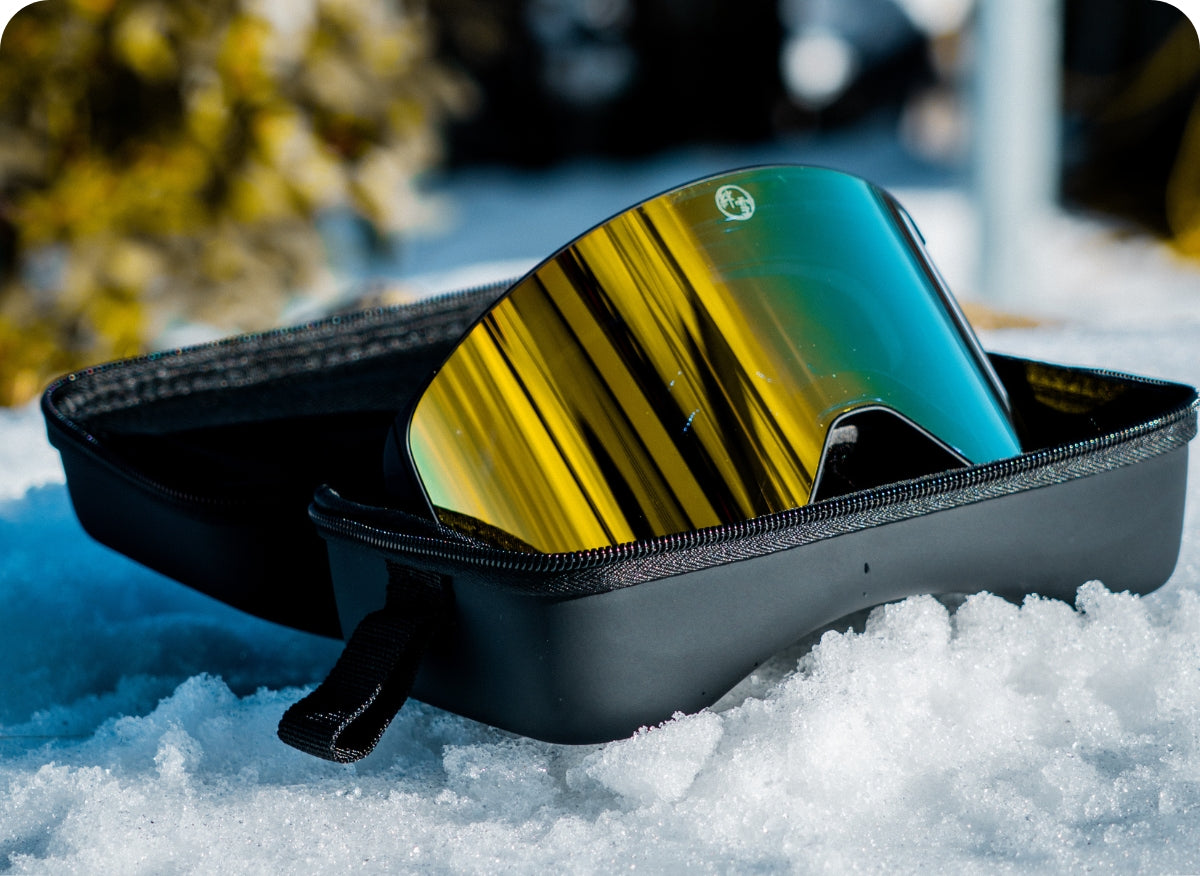
When you start shopping for ski goggles, the term "lens shape" comes up quickly. Cylindrical or spherical. Two words that sound technical but actually describe something straightforward once you know what to look for.
The short answer: cylindrical lenses curve in one direction and sit closer to the face, while spherical lenses curve in two directions like a bubble and sit slightly further out. Both work well on the mountain. The difference comes down to optics, fit preference, and price.
This guide explains what each lens shape does, how they compare in real conditions, and how to decide which suits you.
What Is a Cylindrical Ski Goggle Lens?
A cylindrical lens is flat across the horizontal plane and curves vertically to wrap around the face. Picture a section cut from a vertical tube. The lens sits relatively close to your face and follows the natural curve of your cheeks and forehead.
Cylindrical lenses are the most common lens shape across the ski and snowboard goggle market. They are well-established, widely used across a broad range of price points, and perform reliably in real alpine conditions.
The KIZUKI Dawn Magnetic Ski Goggle uses a cylindrical lens, designed to sit comfortably against the face while providing a wide, unobstructed field of view.
What Is a Spherical Ski Goggle Lens?
A spherical lens curves in two directions simultaneously, both horizontally and vertically, similar to the outer surface of a sphere or a bubble. This gives the goggle a more pronounced, outward dome shape.
Because of how the lens curves, a spherical goggle tends to sit slightly further from the face. The curve follows the natural shape of the eye rather than the face, which is where much of the optical argument for spherical lenses comes from.
Spherical lenses are often found at higher price points, though that is not always a reliable indicator of optical quality on its own.
How Lens Shape Affects Your Vision
Spherical ski goggles are not necessarily better than cylindrical ones. A spherical lens can offer slightly less optical distortion at the edges of your vision, but a well-made cylindrical lens closes much of that gap. For most recreational skiers and snowboarders, the practical difference on the mountain is small.
Here is how the two shapes compare across the factors that matter most.
Distortion
A spherical lens can reduce optical distortion at the edges of your vision because the curve more closely mirrors how the eye naturally sees. A well-made cylindrical lens minimises this too, though some distortion at the periphery is more common in cheaper cylindrical designs.
Field of View
Both shapes can offer a wide field of view. Lens size and frame design tend to matter more here than shape alone. A large cylindrical lens can outperform a small spherical one for peripheral awareness. For a deeper look at what affects peripheral vision on the mountain, the guide to ski goggles with a wide field of view covers this in more detail.
Glare
The outward curve of a spherical lens can reduce certain types of glare by angling the lens surface away from direct light. The practical difference on an average ski day is minor for most riders.
Clarity Across the Lens
Spherical lenses tend to offer slightly more consistent optical clarity from centre to edge. This is the strongest genuine argument for spherical design.
| Feature | Cylindrical | Spherical |
|---|---|---|
| Lens shape | Curves vertically only | Curves in both directions |
| Face proximity | Sits closer to the face | Sits further from the face |
| Distortion | Slightly more at the edges | Generally less distortion |
| Field of view | Wide, depending on lens size | Wide, depending on lens size |
| Typical price range | Budget to premium | Mid to premium |
| Best suited for | Versatile everyday use | Riders prioritising optics |
Does Lens Shape Affect Fogging?
Lens shape is not the main cause of fogging. Fogging happens when warm, moist air from your face meets the cold inner surface of the lens. The ventilation system, anti-fog coating, and lens construction are the primary factors in how well a goggle resists fog.
A spherical lens sitting slightly further from the face can allow marginally better airflow in some cases, but a well-ventilated cylindrical goggle with quality anti-fog construction will outperform a poorly ventilated spherical one in real conditions. Shape alone is not a reliable indicator of fog resistance. For practical tips on keeping your lenses clear, the guide to cleaning and caring for ski goggles is worth a read.
Price and Lens Shape: Is Spherical Actually Better Value?
For most recreational riders, the optical advantage of a spherical lens is real but modest. It becomes relevant mainly for advanced riders where edge clarity and distortion reduction genuinely affect performance.
At the budget end of the market, paying more for a spherical lens does not guarantee better vision than a well-made cylindrical lens at a comparable price. Construction quality, coating technology, and lens grade matter more than shape. As you move into mid-range and premium cylindrical options, the quality gap narrows considerably.
The assumption that spherical automatically means better is understandable but worth questioning. Focus on overall build quality rather than shape alone.
Which Lens Shape Is Right for You?
Most riders, especially beginners and intermediates, will not notice a meaningful difference between a good cylindrical goggle and a good spherical goggle on the mountain.
For beginners in particular, cylindrical lenses are a practical and accessible starting point. They are widely available, reliable, and come at price points that make sense before you know exactly what you want from a goggle. What matters more early on is a comfortable fit, a mid-range VLT lens that handles mixed conditions, and a reliable anti-fog system.
Choose cylindrical if you want a reliable, widely available option that performs well across conditions, tends to fit closer to the face, and is available at more accessible price points.
Choose spherical if you prioritise edge-to-edge optical clarity, prefer the dome-shaped fit, or are at a level where small optical advantages matter to you.
Neither is the wrong answer. The bigger factors in your goggle decision are lens VLT for your typical conditions, the quality of the anti-fog system, fit and helmet compatibility, and whether you want the flexibility of interchangeable lenses. If you are still building a picture of what to look for overall, the ski goggles lens guide is a useful starting point before you decide.
A Note on Fit
Regardless of lens shape, fit matters more than most riders expect. A goggle that sits poorly, leaves gaps at the sides, or presses uncomfortably against your nose will affect your experience far more than the lens shape beneath the frame.
Try both shapes where possible, and pay attention to how the goggle sits across your nose bridge and cheeks before making a final decision. If you have a narrower face or prefer a lower-profile fit, the Dawn Slim collection is worth considering alongside the standard option.
The Right Goggle Is the One That Works for You
Whether you ride with a cylindrical or spherical lens, what matters most is that your goggle fits well, protects your eyes, and gives you clear vision in the conditions you ride most. Both shapes have earned their place on the mountain.
If you want to explore a cylindrical option built for everyday alpine performance, the KIZUKI Dawn Goggle Collection is worth a look.
Share:
How to Buy Ski Goggles Online in Australia (Without Getting It Wrong)
Dawn Standard vs Slim: How to Find the Right Ski Goggle Fit