


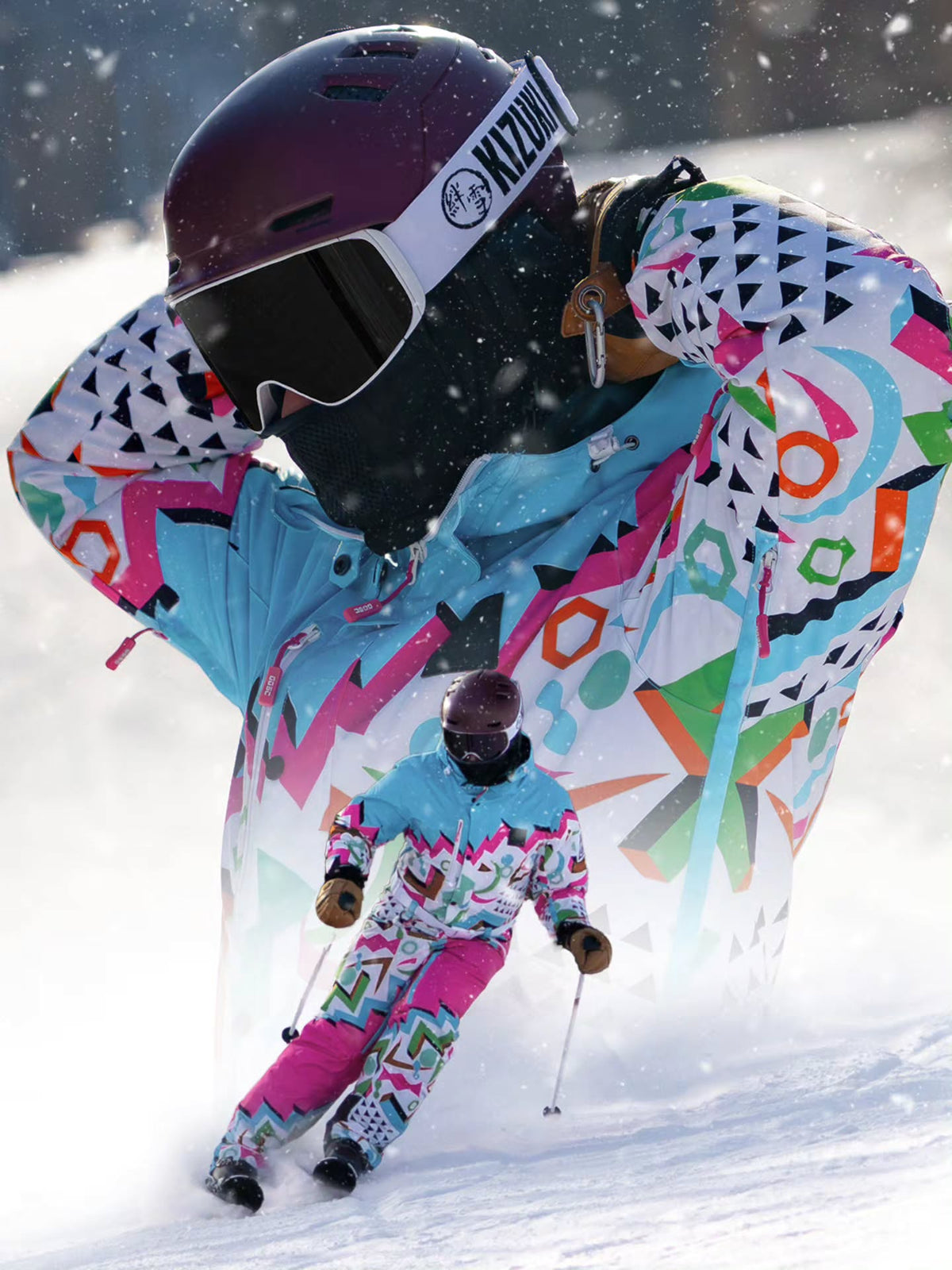
A jerry gap is the strip of bare forehead you can see between the top of your goggles and the bottom of your helmet. In North America you will hear the same thing called a gaper gap. Same gap, different slang.
It is the most talked about fit issue in snowsports and also the most misunderstood. Most people think it is purely a style problem. It usually is not. A gap is your helmet and goggles telling you they are not sitting together properly, and that has consequences well beyond how you look in the lift queue photo.
Where the word "jerry" came from
Nobody can agree, which is part of the fun. The most repeated theory is that it is old mountain slang for someone new to the sport, passed down through ski patrol and lifties long enough that the origin got lost. Other versions trace it to a mispronounced name or a nickname for a specific type of visitor.
What matters more is how the term is used today, which is mostly affectionate. Everyone has been a jerry. Plenty of very good riders still have a gap and could not care less. If you are reading this because you spotted one in a photo, you are already ahead of where most people were in their first season. If you are still getting your head around gear basics, our ski goggles guide covers the fundamentals.
Why a jerry gap actually matters
A gap exposes the one patch of skin that gets hit hardest on the mountain. Snow reflects a large amount of UV back up at you, and a strip of forehead sitting between two pieces of gear is the spot most likely to burn without you noticing.
There is also the cold. Wind moving across your forehead at speed is uncomfortable within minutes and genuinely distracting by the end of a run. On a snowy day, that same gap collects powder that then melts against your skin and runs down inside your goggles.
The bigger issue is what the gap is telling you. If your goggles are sitting low enough to leave a visible strip, they are probably not seated evenly on your face either. That means uneven pressure on the foam seal, which lets warm air escape in the wrong places and makes fogging more likely. Goggles that are not anchored well also tend to creep downward as you ride, so by your third run you are adjusting them at the top of every lift.
Close the gap properly and you usually fix comfort, warmth, and lens fog at the same time.
What causes a jerry gap
There are only a handful of real causes, and each one has a specific fix.
| Cause | What is happening | The fix |
|---|---|---|
| Goggle frame is too small for your helmet | The frame does not reach the helmet brow, so a gap is built in before you even put them on | Match frame size to your helmet, not just your face. Larger or taller frames close the distance |
| Strap routed under the helmet | The strap pulls the goggles down and back instead of holding them up against the brow | Run the strap over the outside of the helmet, every time |
| Helmet clip not used | The goggles have nothing holding them in position, so they slide down through the day | Use the clip on the back of the helmet to lock the strap in place |
| Beanie worn under the helmet | Extra bulk lifts the helmet higher on your head and opens a gap underneath it | Use a thin liner if you need warmth, or wear the beanie before and after riding instead |
| Frame profile does not match your face | Low bridge or flatter facial profiles let the goggles sit lower than intended | Choose a frame shaped for your face so the goggles sit where they were designed to |
How to close the gap
Start with the strap, because it is free and fixes most cases. The strap belongs on the outside of your helmet, not underneath it. Underneath, it drags the goggles downward. Over the top, it holds them up into the helmet brow where they belong.
Then use the clip. Almost every helmet has a small retaining clip at the back for exactly this job. It stops the strap wandering and keeps the goggles at a consistent height all day.
If the gap is still there, it is a sizing question. Goggles and helmets are designed as a pair, and ski goggle frames vary a lot in height. A frame that sits perfectly on one helmet can leave a finger-width gap on another. This is why goggle ranges come in more than one size. KIZUKI makes the Dawn in a standard and a slim fit for this reason, because the same face paired with a different helmet often needs a different frame. Our guide to Dawn standard versus slim walks through how to tell which one suits you.
Face shape plays into it too. If you have a lower nose bridge, goggles built around a higher bridge will sit lower on your face and pull away from the helmet. That is a fit mismatch rather than a mistake, and choosing a low bridge fit frame shaped for your profile solves it.
Bulk under the helmet is worth checking as well. A thick beanie pushes your helmet upwards, which opens a gap that has nothing to do with your goggles at all. Keep it thin under the helmet, or save it for the drive and the après.
The 10-second fit check
Put both on together, every time. Helmet first, then goggles over the top, strap outside, clipped at the back.
Then run a finger along the line where the goggle frame meets the helmet. You should feel the two touching, or close to it, with no cold air moving through. If you can slide a finger between them easily, something in the table above is the reason.
Do this in front of a mirror once at home rather than sorting it out on the chairlift.
When a small gap is fine
A few millimetres of space is not a problem. Helmets and goggles are not designed to seal against each other, and forcing them together too tightly can push the goggles down onto your nose and make them uncomfortable.
What you are aiming for is contact without pressure. No visible strip of skin, no wind coming through, no goggles sliding down. If you have that, you are done, and you can stop thinking about it.
The gap became a joke because it is the easiest sign of someone still working out their gear. The quiet truth is that fixing it is mostly about making your gear work properly, and the better look is just what happens along the way. If you are replacing your goggles anyway, the magnetic ski goggle range is a sensible place to start looking.
Share:
Charlotte Pass: The Complete Skiing and Snowboarding Guide
Selwyn Snow Resort: The Complete Skiing and Snowboarding Guide