


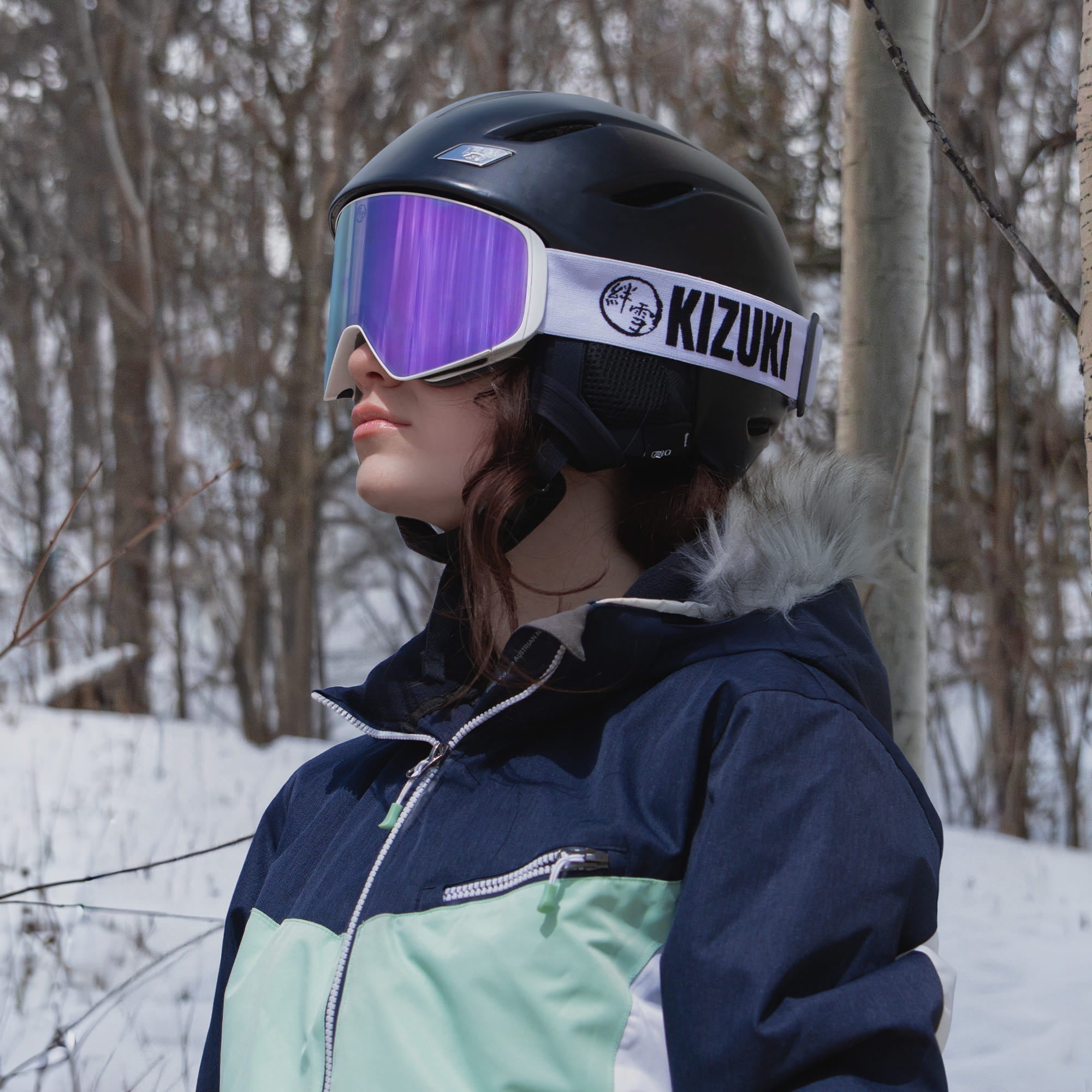
Most ski goggles are designed to be worn over your helmet. It is the most common setup because it keeps the strap secure, helps the goggles sit properly on your face, and works with the way most modern snow helmets are built.
A good helmet and goggle fit should feel natural. Your goggles should sit close to the helmet, seal comfortably around your face, and stay in place without needing the strap pulled too tight. If you are dealing with fogging, nose pressure, slipping, or a cold gap across your forehead, there is a good chance your goggles and helmet are not working together as well as they should.
Whether you call them ski goggles, snow goggles or snowboard goggles, the goal is the same: clear vision, comfort and protection from wind, glare, snow and cold air.
Why Most Riders Wear Ski Goggles Over a Helmet
Wearing ski goggles over a helmet is the standard choice for most skiers and snowboarders. The strap sits around the outside of the helmet, which gives it a wider and more stable surface to hold onto. Most helmets also have a clip or strap holder at the back, which helps stop the goggles from sliding off.
This setup also makes life easier on the mountain. You can adjust the strap more easily, lift your goggles up when you stop, and take them off without removing your helmet. For most riders, especially beginners and intermediate skiers, it is simply the most practical and comfortable way to wear them.
There are some snowboarders who wear goggles under the helmet. This is often a style choice, especially in park riding, and some riders like the closer feel against the head. It is not automatically wrong, but it only works if the helmet still fits properly. If the strap creates pressure, lifts the helmet, or changes the way the helmet sits, it is better to wear your snowboard goggles over the helmet instead.
Ski Goggles, Snow Goggles and Snowboard Goggles: Is There a Difference?
In most cases, ski goggles, snow goggles and snowboard goggles are describing the same category of product. They are all built to protect your eyes from snow, wind, glare and UV exposure while giving you clear visibility in alpine conditions.
The differences usually come down to frame shape, sizing, lens technology and style. Snowboard goggles may sometimes have a larger or more relaxed look, while ski goggles may be described with more technical fit language. But when it comes to wearing goggles over a helmet, the same rules apply.
The goggles should fit your face first, then work cleanly with your helmet. A great lens will not feel great if the frame digs into your nose or leaves a cold space between the helmet and the top of the goggles. If you are still learning what matters most when choosing goggles, our ski goggles guide is a helpful place to start.
What a Good Helmet and Goggle Fit Feels Like
The easiest way to check your fit is to put your helmet on first, then place your goggles over the helmet and pull them into position. The helmet should sit level on your head, not tilted backwards. The goggles should rest naturally against your face without being forced into place.
You are looking for a smooth connection between the top of the goggle frame and the bottom edge of the helmet. There should not be a large exposed gap across your forehead. The frame should also feel even across your face, with no sharp pressure on the bridge of your nose or under your eyes.
A good fit usually feels secure but not tight. If you need to pull the strap as far as it can go just to keep the goggles in place, the frame or strap may not be right for your helmet. If the helmet pushes the goggles down and blocks your vision, the helmet may be sitting too low or the goggles may be too tall for that helmet shape.
Understanding Goggle Gap
Goggle gap is the space between the top of your goggles and the bottom of your helmet. A small amount of space can happen depending on face shape and helmet design, but a large gap is usually a sign that something is not fitting properly.
The problem with goggle gap is not just appearance. Exposed skin can get cold quickly, especially in wind or snowfall. It can also let air and moisture move into areas where you do not want them, which can make the setup less comfortable and sometimes contribute to fogging.
Here is a simple way to diagnose what might be happening:
| Fit issue | What it usually means | What to try |
|---|---|---|
| Large gap between helmet and goggles | Helmet brim and goggle frame do not align | Adjust helmet position or try a different frame shape |
| Goggles push down on nose | Helmet may be sitting too low or goggles are too tall | Refit helmet, loosen strap slightly, check frame size |
| Strap slips up or down | Strap tension or helmet clip may not be secure | Use the rear helmet clip and adjust the strap evenly |
| Fogging near top of lens | Ventilation may be blocked | Check the helmet brim, goggle vents and face covering position |
| Pressure around temples or cheeks | Frame may not suit your face shape | Try a different frame size or softer fit |
The best fix is not always to tighten the strap. In fact, over-tightening can make things worse by distorting the frame, increasing pressure and reducing comfort.
Why Goggles Fog When Worn With a Helmet
Fogging usually happens when warm, moist air gets trapped inside the goggle area and meets a cold lens. A helmet can make this worse if it blocks the top vents of your goggles or pushes the frame into a position where air cannot flow properly.
This is why helmet compatibility matters. Good snow goggles need space to breathe. If your helmet sits too low over the top of the frame, it can restrict the vents and make fogging more likely. A face covering can also cause issues if it directs warm breath up into the goggles.
To reduce fogging, focus on airflow and moisture control. Keep the vents clear, avoid tucking a neck warmer or balaclava into the goggle foam, and let your goggles dry properly after riding. If the inside of the lens gets wet, avoid rubbing it aggressively, as many anti-fog coatings are delicate. For more detailed care advice, read our guide on how to clean ski goggles.
Sometimes fogging is blamed on the goggles, but the real issue is the full setup. Your helmet, goggles, face covering and riding conditions all work together.
Over-Helmet vs Under-Helmet: Which Is Better?
For most people, over-helmet is the better choice. It is secure, practical and works with the way most helmets are designed. It also makes adjusting your goggles easier throughout the day.
Under-helmet can work for some snowboarders, but it is more dependent on personal preference and helmet shape. The main risk is that the strap can create pressure under the helmet or affect how the helmet sits on your head. If it feels uncomfortable after a few minutes at home, it will usually feel worse after a full day in the snow.
The easiest rule is this: wear your goggles over the helmet unless you have a clear reason not to, and only wear them under the helmet if your helmet still fits exactly as it should.
How to Choose Snow Goggles That Fit Over a Helmet
When choosing goggles to wear over a helmet, start with fit rather than colour. Lens colour matters, especially for different light conditions, but comfort and compatibility are what decide whether you will actually enjoy wearing them all day.
Look for a strap that adjusts easily around a helmet, a frame that sits evenly on your face, and ventilation that will not be blocked by the helmet brim. If you have a smaller face, a slimmer frame may give you a better seal and reduce pressure. If you prefer a larger field of view, a bigger frame may feel more natural, as long as it does not clash with the helmet.
This is where the difference between frame options matters. A standard goggle frame can suit riders who like a wider fit and broader field of vision, while a slim frame can be better for smaller faces or riders who find regular goggles too bulky.
At KIZUKI, that is the general difference between the Dawn magnetic ski goggle collection and the Dawn Slim magnetic ski goggle collection. Both are made for snow use, but the better choice comes down to your face shape, helmet fit and personal comfort.
If you want to compare styles, lens options and fit, you can also explore the full KIZUKI ski goggles collection.
Common Fit Mistakes
The most common mistake is buying goggles and assuming they will automatically work with any helmet. Most modern snow goggles are helmet-compatible, but that does not mean every combination is perfect.
Another common issue is wearing the helmet too far back. This creates a bigger forehead gap and can make even well-fitting goggles look wrong. The helmet should sit level and secure before you judge the goggle fit.
It is also worth checking your setup before your first snow day. Try the goggles and helmet together at home for a few minutes. Move your head around, look side to side, and notice any pressure points. It is much easier to fix a fit issue before you are standing in cold wind with fogged lenses.
Final Thoughts
Ski goggles should usually be worn over your helmet. It is the most reliable setup for security, comfort and day-to-day use on the mountain. The fit should feel close and stable, without a large goggle gap, blocked vents or pressure on your nose.
If you are choosing new ski goggles, snow goggles or snowboard goggles, think about the full setup rather than just the lens colour or frame style. Your goggles, helmet and face shape all need to work together.
Get that right, and your goggles should almost disappear while you ride. You will notice the clear view, not the fit.
Share:
Ski Goggles for Over Glasses: How to Choose the Right OTG Fit
How to Buy Ski Goggles Online in Australia (Without Getting It Wrong)