


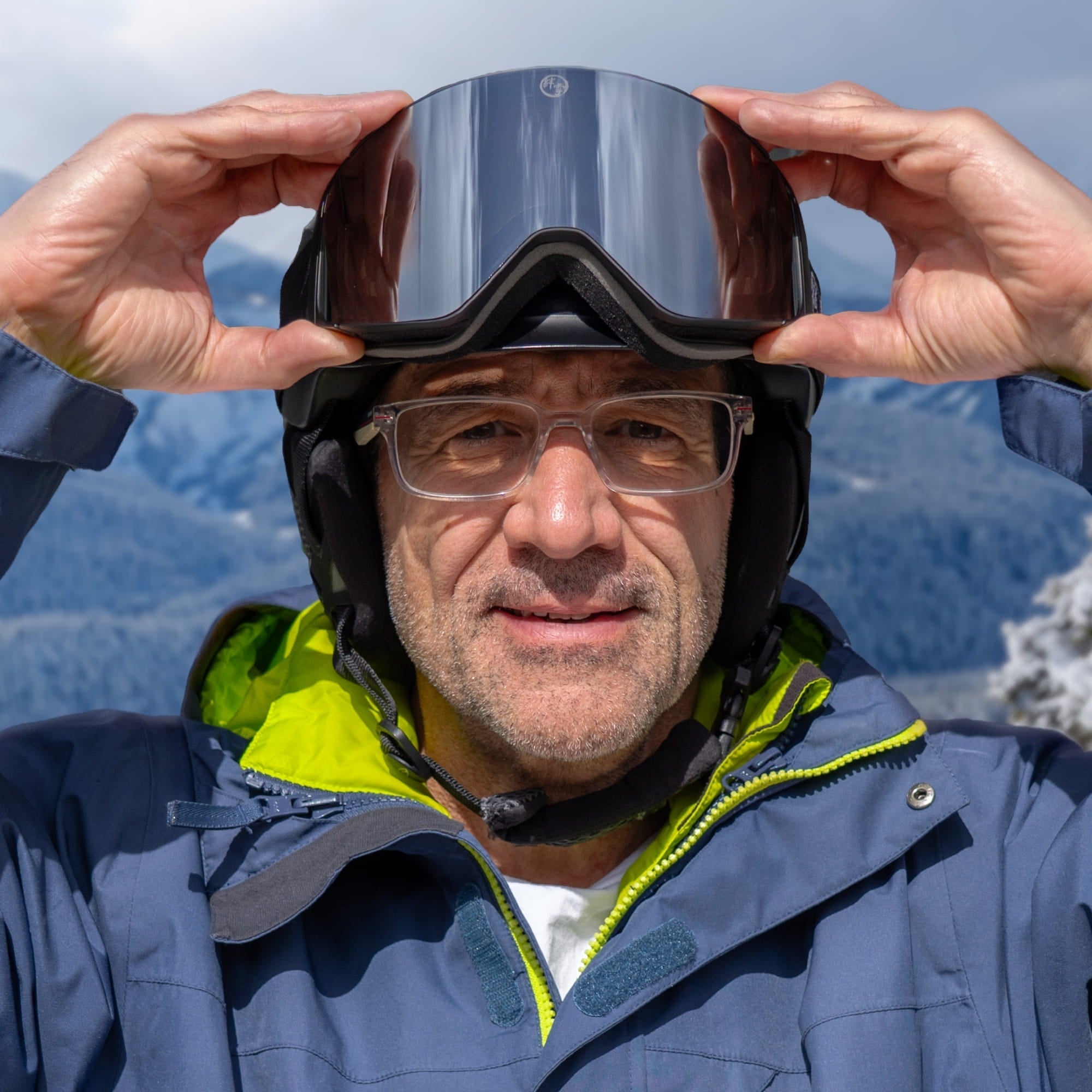
You can wear ski goggles over glasses, but the goggles need to be designed for it. The best ski goggles for over glasses should give your prescription frames enough space, reduce pressure around the temples and maintain airflow to help prevent fogging.
For skiers and snowboarders who rely on prescription glasses, visibility is not optional. Your goggles need to protect your eyes from wind, snow, glare and changing alpine light while still allowing you to see clearly through your own eyewear.
This is where OTG goggles, meaning “Over The Glasses”, become useful. This guide explains how to choose ski, snow and snowboard goggles for over glasses, including fit, fogging, helmet compatibility, lens choice and common buying mistakes.
What Makes Ski Goggles Suitable for Over Glasses?
Ski goggles for over glasses are designed with more internal space than standard goggles. This extra room allows prescription frames to sit inside the goggle without being pushed into your face.
The key difference is not only the size of the goggle from the outside. A goggle may look large but still have limited space inside the frame. Good OTG ski goggles usually have a deeper internal design, side clearance for glasses arms and face foam that allows the glasses to sit comfortably without creating pressure points.
Ventilation also matters. When you wear glasses under snow goggles, there are more lens surfaces inside the frame. That means airflow becomes even more important for reducing condensation and keeping your vision clear.
The best snow goggles for over glasses should feel comfortable, stable and breathable. They should not force your glasses into your nose, cheeks or temples, and they should not make your prescription lenses sit too close to the goggle lens.
The Fit Test: How to Know If Goggles Work With Your Glasses
The right OTG fit should feel comfortable from the moment you put the goggles on. Your glasses should stay in their normal position, with no pressure, twisting or contact against the inner lens.
A simple way to test the fit is to put on your glasses as you normally wear them, then place the goggles over the top without overtightening the strap. The goggles should settle evenly around your face while your glasses remain still.
Next, gently move your head side to side. If your glasses shift, press into your nose or touch the inside of the goggle lens, the fit is not right. You should also check the sides of your glasses. The arms should have enough room to sit naturally without being squeezed by the goggle frame.
Comfort is especially important because pressure points often get worse after a few runs. A small amount of tightness at home can become distracting on the mountain, especially in cold conditions or when wearing a helmet.
Why Glasses Fog Inside Ski and Snowboard Goggles
Glasses fog inside ski and snowboard goggles when warm, moist air becomes trapped between your face, prescription lenses and the goggle lens. Poor airflow makes this worse because the moisture has nowhere to escape.
Fogging usually happens when warm air from your face, breath or body heat meets a colder lens surface. Because glasses add another lens inside the goggle, there is more opportunity for condensation to form.
This is why standard goggles can be frustrating for glasses wearers. If the frame sits too close to your eyewear or blocks airflow around the lenses, fogging can build quickly. The issue is not always the lens itself. Often, it is a combination of fit, moisture and restricted ventilation.
Helmet fit, face coverings and how you handle your goggles during breaks can also affect fogging. Pulling a neck warmer too high, blocking vents with a helmet brim or placing goggles on your forehead can all trap moisture inside the frame.
How to Reduce Fog Without Damaging Your Goggles
To reduce fog when wearing glasses under ski goggles, choose OTG-compatible goggles with strong ventilation and keep warm, moist air moving out of the frame.
Keep airflow moving
Airflow is one of the most important parts of fog prevention. Your goggles need open ventilation channels so warm air can escape and cooler air can circulate.
Make sure your helmet does not block the top vents of the goggles. You should also avoid pulling a face covering up underneath the bottom edge of the frame, as this can direct warm breath straight into the goggle.
Let moisture escape
Moisture builds up during riding, especially when you are working hard, sweating or moving between warm indoor spaces and cold outdoor conditions.
Try to keep your goggles on your face while riding rather than resting them on your forehead. Your forehead is warm and can transfer moisture into the frame. At the end of the day, let your goggles dry fully before storing them in a case.
Be careful with the inner lens
If your goggles or glasses fog up, avoid wiping the inside of the goggle lens while it is wet. Many ski goggles use an anti-fog coating on the inner lens, and aggressive wiping can damage that surface.
Instead, let the lens air-dry where possible. For proper care, you can read the KIZUKI guide on how to clean ski goggles.
Ski Goggles vs Snow Goggles vs Snowboard Goggles for Over Glasses
Ski goggles, snow goggles and snowboard goggles for over glasses usually refer to the same type of product. The important factor is whether the goggles are OTG-compatible, not whether you ski or snowboard.
Skiers and snowboarders both need goggles that provide enough internal space, reliable ventilation and a secure helmet-friendly fit. The search terms may change, but the problem is the same: you need goggles that fit comfortably over prescription glasses without fogging or pressure.
So, if you are comparing snowboard goggles for over glasses, look for the same features you would want in OTG ski goggles. Focus on fit, airflow, comfort and lens clarity rather than the sport label alone.
Helmet Fit Matters More Than Most People Think
Ski goggles for over glasses need to work with your helmet as well as your eyewear. A goggle may feel comfortable on its own, but the fit can change once your helmet is on.
The helmet should not push the goggles down into your glasses. If that happens, your frames may press into your nose or cheeks, making the setup uncomfortable after a short time. The top of the goggle should sit neatly under the helmet brim without creating a large gap or blocking ventilation.
A good helmet and goggle fit should feel stable without needing to overtighten the strap. Your glasses should stay level inside the frame, and the goggles should seal around your face without crushing your prescription frames.
If you are choosing snow goggles for over glasses, it is worth thinking about your full setup: glasses, goggles and helmet together. Comfort depends on how all three pieces work as one system.
OTG Goggles vs Contacts vs Prescription Inserts
OTG goggles are usually the simplest option for skiers and snowboarders who already wear prescription glasses. Contacts and prescription inserts can also work, but they come with extra comfort, cost or setup considerations.
| Option | Best for | Consideration |
|---|---|---|
| OTG goggles | Riders who want to wear their normal glasses | Fit, ventilation and frame space matter |
| Contact lenses | Riders comfortable wearing contacts all day | Cold, wind and dry air may irritate some eyes |
| Prescription inserts | Frequent riders wanting a glasses-free goggle interior | Extra cost and prescription setup required |
For many riders, OTG goggles are the most practical starting point because they do not require changing your normal vision setup. You can wear your everyday glasses and still get the protection of a snow goggle.
Prescription inserts may suit frequent riders who want a cleaner internal fit, while contact lenses may work for people who already wear them comfortably during sport. The best option depends on your eyes, your prescription and how you prefer to ride.
Lens Choice Is More Important When You Wear Glasses
When you wear glasses under ski goggles, lens quality matters because you are looking through two sets of lenses. Clear optics, anti-fog performance and the right tint can make a noticeable difference to visibility.
A good goggle lens should protect your eyes from wind, snow and UV exposure while helping you read the terrain in different light. Bright sun, flat light, cloud, falling snow and shaded areas can all change how clearly you see the surface.
This is why interchangeable lenses are useful. A darker lens may suit bright conditions, while a lighter or contrast-enhancing lens can help when visibility drops. If you want a deeper breakdown, read the KIZUKI ski goggles lens guide or explore magnetic ski goggle lenses.
For riders comparing OTG-compatible options, the KIZUKI Dawn Magnetic Ski Goggle is designed to be worn comfortably over many prescription glasses, while offering magnetic lens changes for shifting alpine light conditions.
Common Buying Mistakes to Avoid
The most common mistake is assuming any large ski goggle will fit over glasses. Size helps, but true OTG compatibility depends on internal space, side clearance, ventilation and face fit.
Another mistake is choosing goggles based only on lens colour. Lens tint matters, but glasses wearers should prioritise fit and airflow first. If the goggles press on your frames or fog constantly, the lens colour will not solve the problem.
It is also important not to overtighten the strap to force a better seal. This can push the goggles into your glasses and create pressure around your nose or temples. A good OTG fit should feel secure without needing excessive strap tension.
Finally, do not forget the helmet. Your goggles may fit over your glasses on their own, but if your helmet pushes them down or blocks the vents, comfort and visibility can suffer.
Summary
The best ski goggles for over glasses are OTG-compatible goggles that provide enough internal space, comfortable side clearance, strong ventilation and reliable lens performance.
For skiers and snowboarders who wear prescription glasses, the right fit can make a major difference. Your goggles should not press your glasses into your face, block airflow or create fogging problems. They should sit comfortably with your helmet and give you clear visibility across changing snow conditions.
If you are comparing snow goggles for over glasses, focus on fit first, then ventilation, helmet compatibility and lens choice. You can explore the full KIZUKI ski goggles collection or browse the Dawn Goggle Collection to compare OTG-compatible magnetic ski goggles.
Share:
Best Snow Goggles in Australia: Why KIZUKI Dawn & Dawn Slim Are Built for Local Conditions
Ski Goggles Over Helmet: How to Get the Right Fit